
Like a Swiss army knife, Vitamin C is a super multi-tasking antioxidant ingredient in any skincare routine because it does the most and it does it well - brightening your skin for more glow, fading brown marks and hyperpigmentation for a more even tone, helping to boost collagen for more plumpness, working hand in hand with sunscreen to help prevent fine lines and defend against daily environmental stressors - it’s a proper multitasker. This is what makes it one of the most studies active ingredients in skincare. As love and understanding has grown for Vitamin C, it’s rightly matured from being a trending ingredient to a skincare staple.
Quick answer: Vitamin C is an antioxidant suitable for all skin types that helps to brighten your skin, fade hyperpigmentation and dark marks by partially blocking melanin production and supports the development of collagen so your skin is plump and resilient.
What is Vitamin C, and why is it everywhere in skincare?
Vitamin C is a powerful antioxidant that helps protect skin from free radical damage. Simply put it helps to defend your skin against UV exposure, pollution and other everyday environmental stress that create dullness, dryness and sagging. Beyond this defensive role, it also supports the production of collagen and elastin - the protein fibres that act as scaffolding for skin providing plumpness and bounce. Additionally, it helps to temper excess melanin production to keep discolouration and hyperpigmentation in check. This is why it ticks the boxes to be a routine staple, rather than a passing trend.
How does vitamin C work as an antioxidant?
Free radicals are unstable entities generated by UV exposure, pollution and everyday stress. When left unchecked, they break down your skin's collagen, contributing to premature fine lines, wrinkles, dark spots and sagging. Vitamin C neutralises these free radicals before they can do that damage. White and lighter skin tones tend to experience more visible free radical damage earlier than darker skin tones, making Vitamin C a crucial skincare ingredient alongside sunscreen.
How does Vitamin C help with hyperpigmentation and brightening?
Vitamin C's brightening reputation comes down to its effect on tyrosinase, an enzyme your skin needs to produce melanin - btw - all skin colours produce melanin. Certain stabilised forms of Vitamin C such as magnesium ascorbyl phosphate and sodium ascorbyl phosphate help inhibit tyrosinase activity, which slows new pigmentation from forming. Importantly, Vitamin C does all its great work without bleaching or changing your underlying skin tone or lightening your complexion.
Does Vitamin C really help with fine lines and collagen?
Yes! Collagen is essential for your skin's elasticity, plumpness and overall resilience and without enough of it, your skin can look dull, lose its firmness and show fine lines and wrinkles more readily. It’s well documented that Vitamin C supports your skin’s process in building collagen. Research on oral vitamin C supplementation has found measurable improvements in dermal density, texture and wrinkle appearance after around 16 weeks of consistent use, with even better results when paired with collagen peptides.
3 Vitamin C Serums CLICKED! Experts Swear By
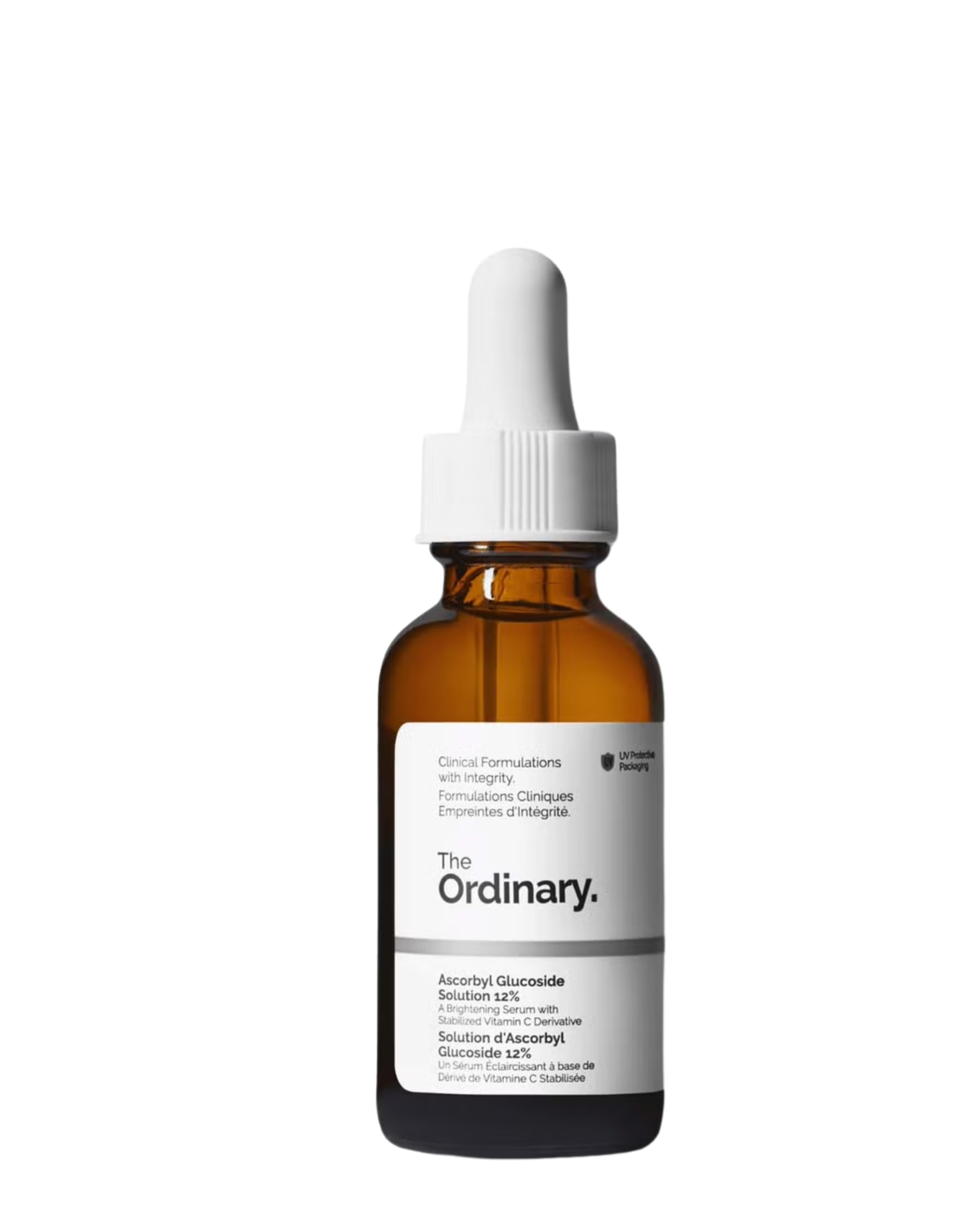
SAVE
The Ordinary Ascorbyl Glucoside Solution 12% £14.10
A gentle water-soluble Vitamin C derivative that’s great if you’re a Vitamin C newbie or have sensitive skin.
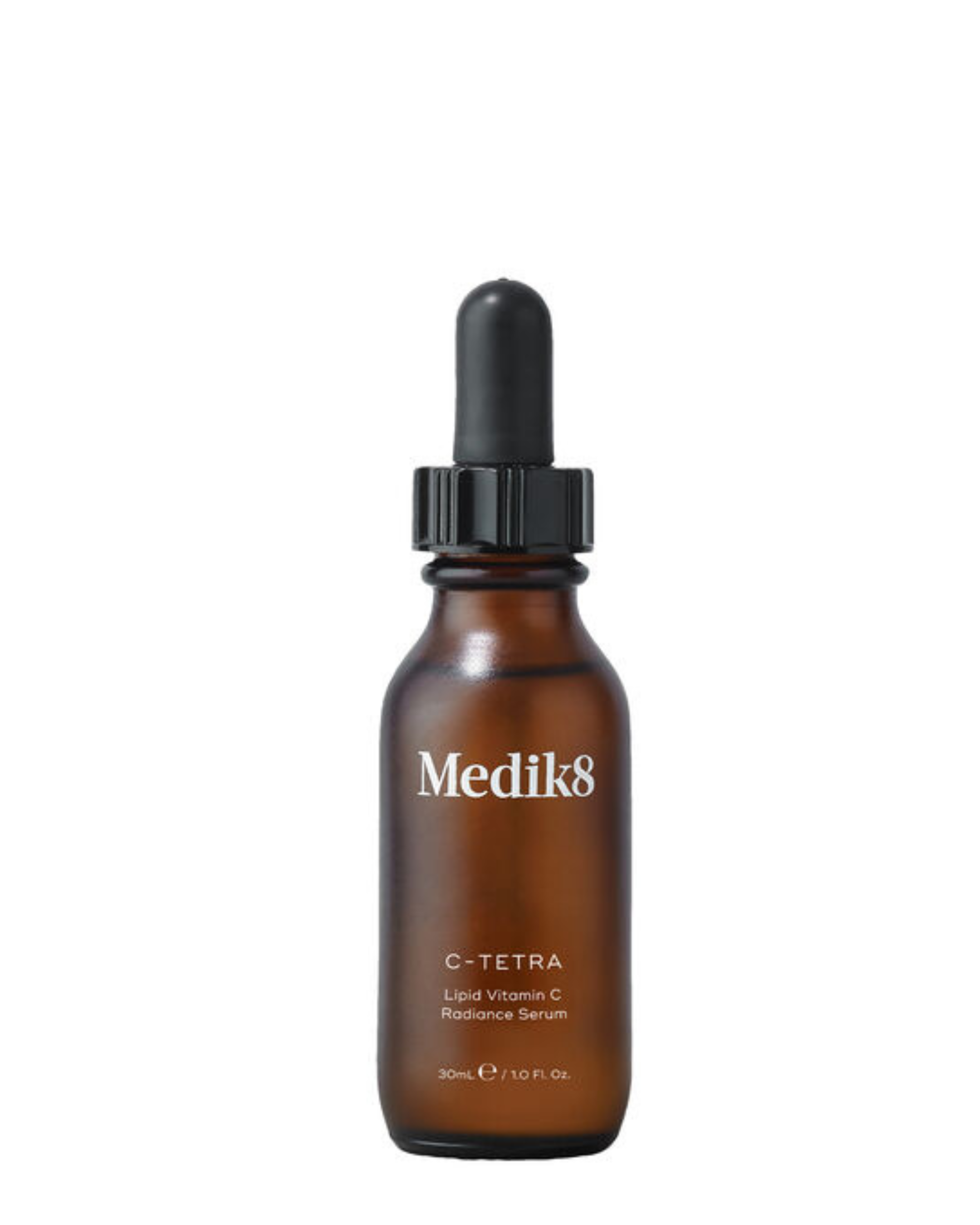
SPEND
Medik8 C-Tetra Lipid Vitamin C Radiance Serum £45
A lipid-soluble Vitamin C derivative that works with your barrier to support and brighten the skin.
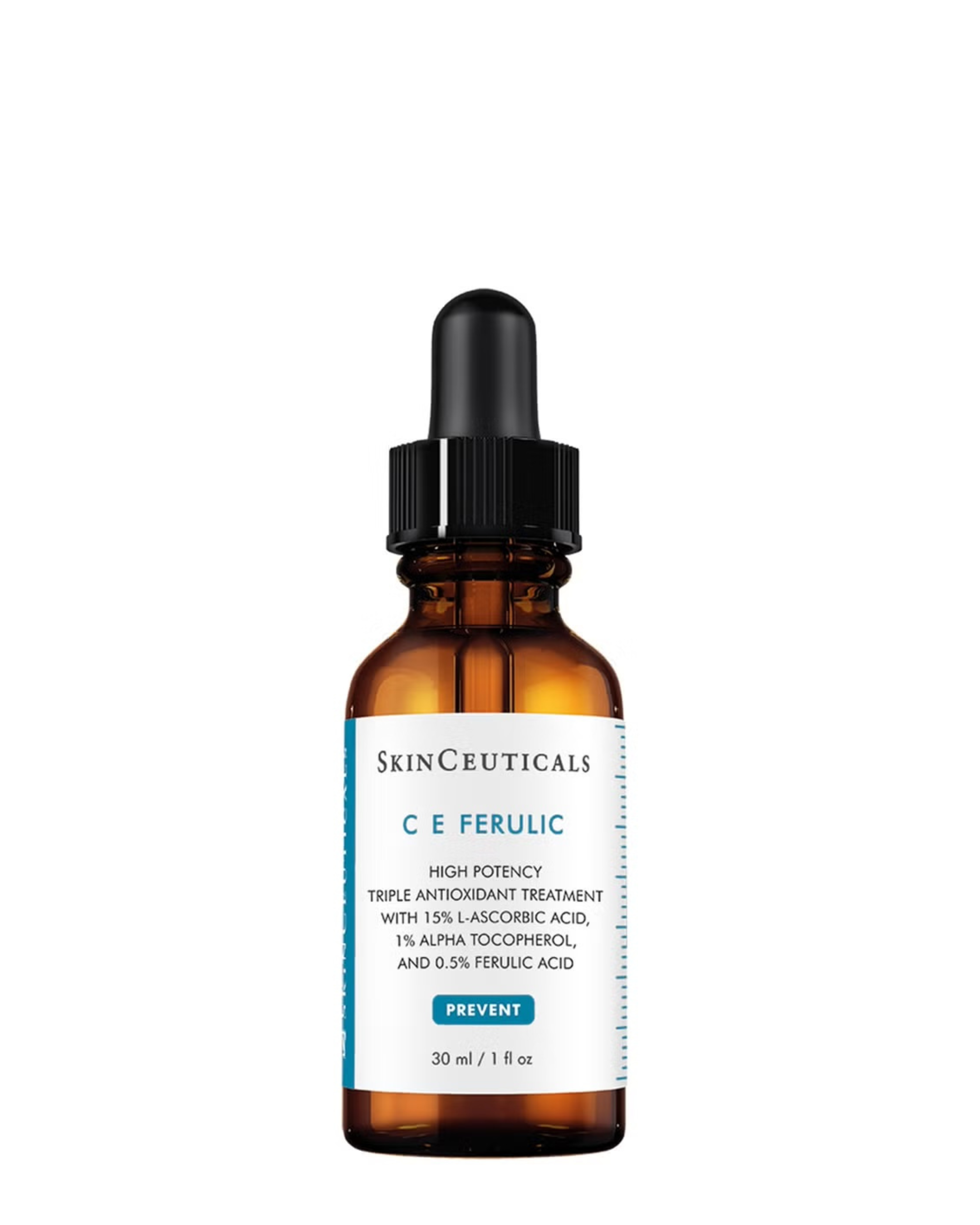
SPLURGE
Skinceuticals C E Ferulic Serum £169
A well studied ingredient combination from a 2008 Duke University trial, which found it significantly reduced UV damage to the skin.
What types of Vitamin C’s are there?
Vitamin C has many guises and shows up under a lot of different names on ingredient labels. The main name being L-ascorbic acid, but also ascorbic acid, sodium ascorbyl phosphate, ascorbyl palmitate, retinyl ascorbate, tetrahexyldecyl ascorbate, 3-O ethyl ascorbic acid, and magnesium ascorbyl phosphate, among others.
L-ascorbic acid is the most researched and most potent form of Vitamin C, but as with all good things, it also has a downside - it's the least stable so it oxidises (goes brown/loses potency) relatively quickly, which is why formulation and packaging matters big time. The more stable derivatives are gentler, better suited to sensitive skin and have a longer shelf life so sometimes it’s a trade-off between potency and performance.
How do you actually use Vitamin C in your routine?
A few practical tips to get the most out of your Vitamin C:
Look for a meaningful concentration. Classic L-ascorbic acid serums are typically formulated between 10% and 15%. This is the range with the strongest evidence behind it for stability and absorption. Although some formulas can go as high as 20%, higher isn't automatically better and past a certain point, you're not getting proportionally more benefit and you could just be irritating your skin.
Patch test if you're sensitive. Vitamin C suits most skin types, but if your skin is easily irritated or reactive, test it on a small area first, especially at higher concentrations or in L-ascorbic acid form.
Fit it into your existing routine. It works well in both morning and evening routines, though most people opt for mornings so it can work alongside sunscreen. It’s usually in a serum form, but it’s not uncommon to have whole ranges from cleanser to sunscreen with Vitamin C as the star ingredient.
Pair it thoughtfully. Vitamin E and niacinamide are both solid partners — they support and stabilise Vitamin C's effects rather than competing with them.
Protect it from light. Vitamin C degrades with sun exposure, which is why it's often sold in dark bottles. Keep it out of direct sunlight to keep its potency going for as long as possible.
Is Vitamin C safe for all skin tones?
Yes! Vitamin C doesn't carry the same skin-tone-specific caveats that some other actives do. It's broadly suitable across skin tones and types. A major brownie point is that because it works by calming pigment production rather than aggressively exfoliating, it carries a lower risk of triggering post-inflammatory hyperpigmentation than some other actives can. That said, melanin-rich skin tends to be more visibly affected by hyperpigmentation in general, which is exactly why vitamin C's brightening, non-aggressive mechanism makes it such a popular choice across the board - it's doing useful work without adding the inflammation risk that comes with harsher ingredients.
When should I start using Vitamin C in my skincare?
There isn’t a definitive age as it really depends on what your skin is doing, but somewhere in the early 20’s is a good time to start incorporating Vitamin C in your skincare. Earlier, if your skin is under a lot of stress and looking dull or lacklustre. You can also use Vitamin C earlier if you’re white because your collagen stores break down faster from UV damage, than darker skin tones who have larger and more active melanin cells providing a head start on sun protection.
Not sure what your skin actually needs right now?
Vitamin C is a great ingredient, but it's not a fix for everything so layering it onto the wrong routine can waste its benefits. A CLICKED! 360° Consultation will looks at what your skin's actually dealing with right now - pigmentation, ageing, sensitivity or even all three and can tell you where Vitamin C fits and what else your routine needs around it.
FAQ
What percentage of Vitamin C should I look for in a serum? Most of the strongest evidence sits around 10% to 15% L-ascorbic acid. Higher concentrations exist, but they don't reliably deliver proportionally more benefit and can increase the risk of irritation, especially on sensitive skin.
Can I use Vitamin C every day? Yes, it's suited to daily use, morning and/or evening, for most skin types. If you're a newbie or have reactive skin, start with every other day and build up.
Does Vitamin C replace sunscreen? This is a hard no! Vitamin C supports your skin's defence against environmental damage, but it’s not a sunscreen substitute.
Why does my vitamin C serum turn orange or brown? That's oxidation in real time. L-ascorbic acid is unstable and breaks down with exposure to air, light and heat, becoming less effective as it does. A serum that's changed colour noticeably has likely lost potency so use that as a sign to replace it.
Is Vitamin C safe to use with retinol or exfoliating acids? Generally yes, though pairing strong actives can increase irritation risk, so keep an eye on the tolerance level of your skin. Many people alternate vitamin C (morning) with retinol (evening) rather than layering them at the same time, which tends to work well for most skin types.
Will Vitamin C lighten my natural skin tone? No, it works to even out discolouration and calm excess pigment production in specific areas, not to lighten your overall skin tone.
Can I use Vitamin C if I’m pregnant or breastfeeding? Yes, you can. Pregnancy hormones can create new skin sensitivities for some people, so just keep an eye on things.